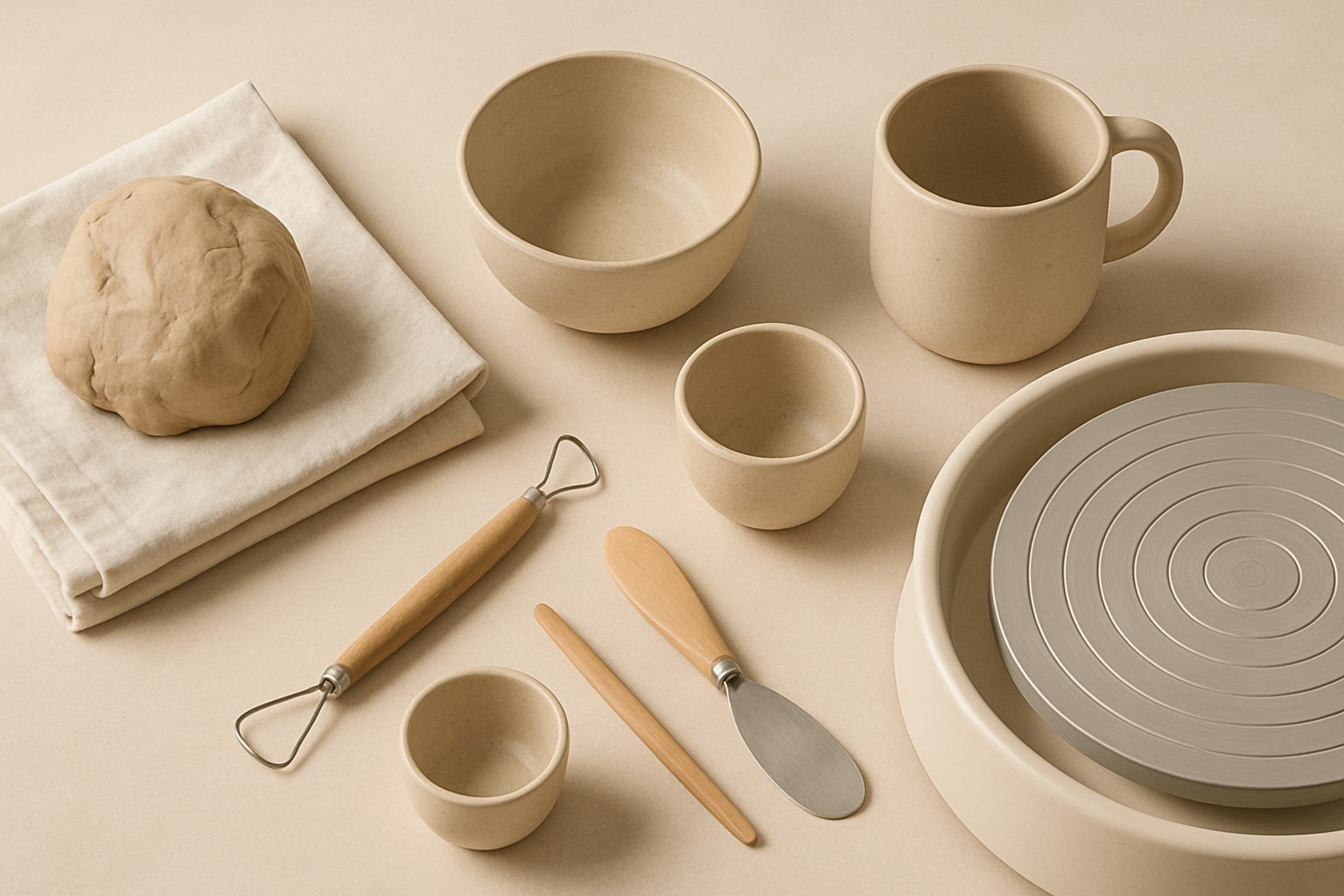
Pottery Wheel vs. Hand-Building — Which Is Right for Your Home Studio?
If you're setting up a pottery studio at home, you'll face an early decision: do you invest in a wheel, or start with hand-building? Both paths lead to genuine ceramic work—but they demand different things from your space, budget, and learning curve. There's no universal right answer, which is why understanding the trade-offs matters.
The Pottery Wheel: Centering on Speed and Symmetry
A pottery wheel lets you make cylindrical forms—bowls, mugs, vases—with speed and precision once you've mastered centring. For many people, this is the appeal. Throwing on the wheel feels like pottery. It's meditative, and the repeatability is satisfying.
But the setup cost is real. A decent tabletop wheel runs £200–£800 depending on power and build quality. You'll also need a bat system (removable work surfaces), trimming tools, and a sturdy bench. In a home studio, the wheel needs a dedicated corner because it demands stability and isn't easily moved.
The skill curve is steeper than people expect. Your first pots—probably for two to three months—will wobble, collapse, or come out lopsided. This isn't failure; it's the learning process. But it requires patience and practice sessions of at least an hour to make progress. Some people find this frustrating; others find it addictive.
Practically, a wheel needs electricity and produces a surprising amount of water splash and clay dust. Keeping a kiln-fired kiln nearby is ideal—if you're wheel-throwing but hand-building your pieces afterwards, you've gained little advantage. Many home potters end up using a local pottery studio's kiln for firing, which costs £1–£3 per piece. If that's your route, factor firing costs into your budget planning.
Space-wise, a tabletop wheel occupies roughly 60cm × 60cm on a sturdy surface. Add space for storing clay, tools, and your in-progress work, and you're looking at needing a dedicated shelf unit or table.
Hand-Building: Lower Barriers, Endless Creativity
Hand-building encompasses pinching, coiling, slab-building, and sculptural techniques. The barrier to entry is genuinely low: you need clay, a wooden board, a few basic tools (a craft knife, wooden spoon, sponge), and space on a table. Total outlay: under £50 if you're starting lean.
The learning curve is gentler, too. Within your first session, you can make a functional pinch pot. Coil-building creates larger forms—bowls, vases, decorative pieces—and the technique rewards intuition and personal expression. Hand-built work often looks deliberately organic, which many people find more visually interesting than the uniformity wheel-throwing can produce.
Hand-building works in genuinely small spaces. A corner of a kitchen table is enough. You're not dependent on electricity, and the mess is manageable—clay dust is minimal, and water use is controlled. You can work for 20 minutes or two hours; the practice doesn't demand long uninterrupted stretches the way wheel-work does.
The trade-off: symmetry and production speed are harder to achieve. If you want to make a dozen matching mugs, hand-building is slower and more taxing on your hands and arms. Repetitive coiling or slab-rolling can cause wrist strain if you're not careful about posture and technique.
Creatively, hand-building is arguably more flexible. You're not confined to the wheel's possibilities; you can make sculptures, irregular forms, textured surfaces, and composite pieces. For many potters, this freedom is the entire point.
Direct Comparison
Space: Hand-building wins decisively for small homes. A wheel needs a permanent, stable setup.
Cost: Hand-building is cheaper upfront (under £50 initial tools vs. £300+). Kiln access is the same either way if you're using a community kiln.
Learning time to a finished pot: Hand-building—weeks. Wheel-throwing—two to three months before you're consistently making pots worth firing.
Wrist and hand strain: Both cause fatigue if done incorrectly or excessively. Hand-building favours controlled practice; wheel-work demands brief, intense sessions.
Creative scope: Hand-building is broader. The wheel excels at functional roundware.
How to Choose
Start with honest answers to three questions:
- Do you have a dedicated table or corner that won't be needed for other purposes? If not, hand-building is the only practical choice.
- Are you drawn to making functional pottery (cups, bowls, plates) or artistic pieces? Wheel-throwing is unbeatable for functional work. Hand-building is more versatile creatively.
- Can you commit to 3-month learning cycle before your first finished pot? If that feels like too long, hand-building gets you to a firing-ready piece faster.
Many home potters eventually do both. You might start hand-building for six months, then add a wheel once you've developed hand strength and understood clay behaviour. That progression actually works well—your hands know clay before the wheel adds speed.
The honest truth: neither choice locks you in. A basic hand-building toolkit costs almost nothing and takes up negligible space. A wheel is a larger commitment, but it's not irreversible. Start with what fits your space and patience, then expand.
Next steps: If you're leaning toward hand-building, check out [our home pottery tool-kit guide] for the specific tools that justify their cost. If a wheel appeals, [our review of budget tabletop wheels for UK studios] covers the models that deliver reliable performance without breaking the budget.
More options
- Pottery Wheels (Electric & Tabletop) (Amazon UK)
- Home Pottery Kilns (Compact & Beginner) (Amazon UK)
- Pottery Clay (Stoneware & Earthenware Bags) (Amazon UK)
- Pottery Tool Kits & Hand Tools (Amazon UK)
- Pottery Glazes (Brush-On & Dipping) (Amazon UK)